
Dethatching
DETHATCHING IN Stevensville, MT
MSU Extension puts the line at 1/2 inch: once the thatch layer between the grass blades and the soil grows thicker than that, it starts blocking air, water, and nutrients from reaching the roots. 406Lawnzz runs power dethatching in Stevensville, MT, using a vertical-blade machine set to the depth your lawn needs, then raking the loosened material and hauling it away. We work in spring, while the grass is growing, and put scope and timing in a written bid first.
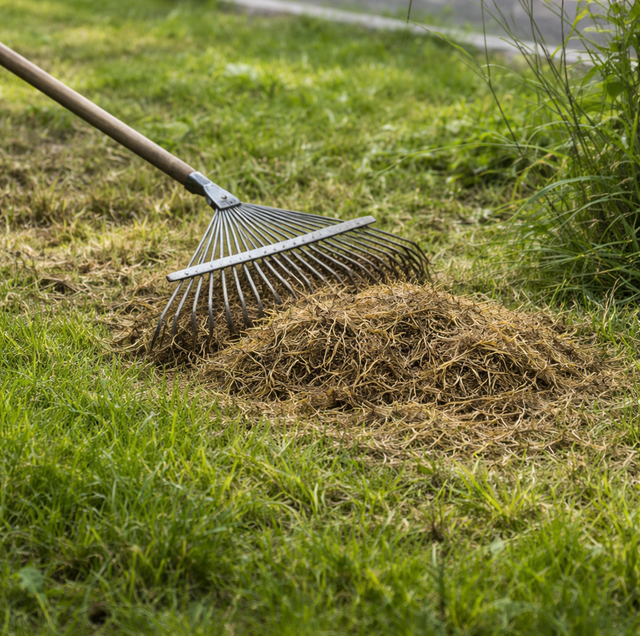
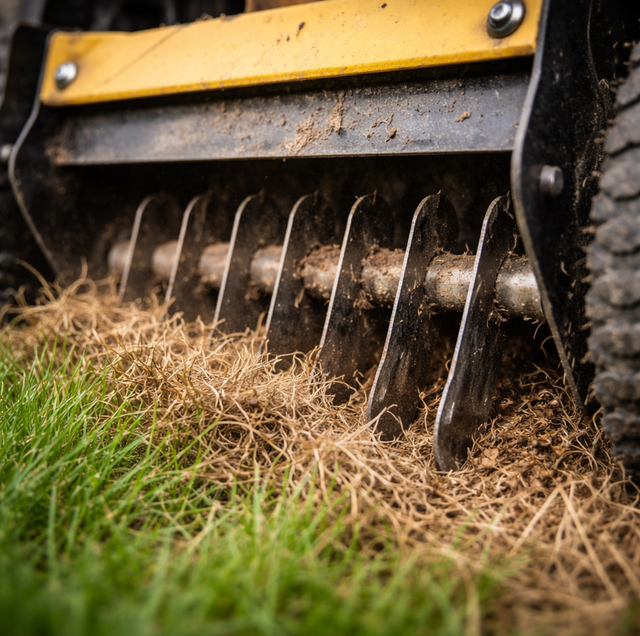
HALF AN INCH OF THATCH IS WHERE A LAWN STOPS DRINKING.
Thatch is the layer of dead stems, roots, and crowns that builds up faster than soil microbes can break it down. A thin layer is fine. Past 1/2 inch it acts like a thatched roof: water beads and runs off, roots grow up into the mat instead of down into the soil, and the lawn feels spongy underfoot.
We run a vertical-blade power dethatcher across the lawn, set to slice the mat without gouging soil, then rake and haul everything that comes up. Expect 2 to 3 rough-looking weeks, then a thicker lawn.
- Thatch depth checked before any blade turns
- Depth adjusted to your lawn, not a default
- Loosened material raked and hauled
- Timed for active spring growth
DETHATCHING
STEVENSVILLE LAWNS THAT FEEL SPONGY ARE TELLING YOU SOMETHING.
Bluegrass and fescue mixes, the standard lawn around here, are heavy thatch builders. Add a few seasons of watering to keep up with 87-degree July afternoons and the mat thickens quickly. If water pools after a sprinkler cycle, the turf gives under your step, or the lawn browns in patches, thatch is the usual reason. We check the depth with a plug before we recommend anything, on residential lawns and HOA common ground alike.
12 INCHES OF RAIN A YEAR MEANS NONE OF IT CAN STOP AT THE THATCH.
The Bitterroot Valley floor gets about 12 inches of precipitation a year and 270+ sunny days. MSU Extension says a Montana lawn needs 1 to 1.5 inches of water a week in spring and fall and up to 2.5 inches in midsummer, most of it from a hose. A thick thatch layer sheds part of every cycle before it reaches the roots, so you pay for water the lawn never gets.
THE MACHINE IS ONLY HALF OF THE JOB.
Set too shallow, a dethatcher combs the surface and changes nothing. Set too deep, it rips crowns out and the lawn spends all summer recovering. Over 8 years of dethatching lawns from Stevensville to Hamilton, Corvallis, Florence, Lolo, and Victor, we have learned to read a thatch plug, pick the depth for that turf, and know when a lawn does not need the machine. Want that judgment on your lawn before a blade touches it?
WHY CHOOSE US FOR DETHATCHING.
A THATCH CHECK BEFORE A SALES PITCH
Dethatching every spring hurts more than it helps, so we measure first. If the plug shows less than 1/2 inch of thatch, we tell you to keep your money and check again in a season or two.
DEPTH SET FOR YOUR TURF, NOT A DEFAULT
Blade depth changes with the grass type, the soil moisture, and how thick the mat is. We adjust the machine on a test strip, look at what comes up, and only then run the full lawn at that setting.
A WRITTEN BID WITH THE TIMING IN IT
You get a written bid before any work begins. It states the area to be dethatched, the raking and hauling, the target week in spring, and what the lawn will look like for the 2 to 3 weeks afterward.
NOTHING LEFT ON THE LAWN
A power dethatcher pulls up a surprising volume of material, often several tarp loads. We rake all of it, load it, and haul it away, so no permit, no burn day, and no windrows drying along the fence.
ONE CREW FROM THATCH TO SNOW
We mow, rake, and plow the same properties we dethatch, so we already know which lawns pool water and which corners stay soft. That history goes into the depth setting and the timing of your visit.
QUICK REPLIES IN A SHORT WINDOW
Spring dethatching has a window of a few weeks between green-up and summer heat, and it closes fast. We answer messages within hours, not days, so your lawn gets on the schedule while the timing still works.
WHAT WE PULL
OUR DETHATCHING WORK
Dethatching is one visit, but it has six distinct parts, and skipping any one shows in the lawn by June. Here is what a standard dethatching job includes, each piece scoped in your written bid.
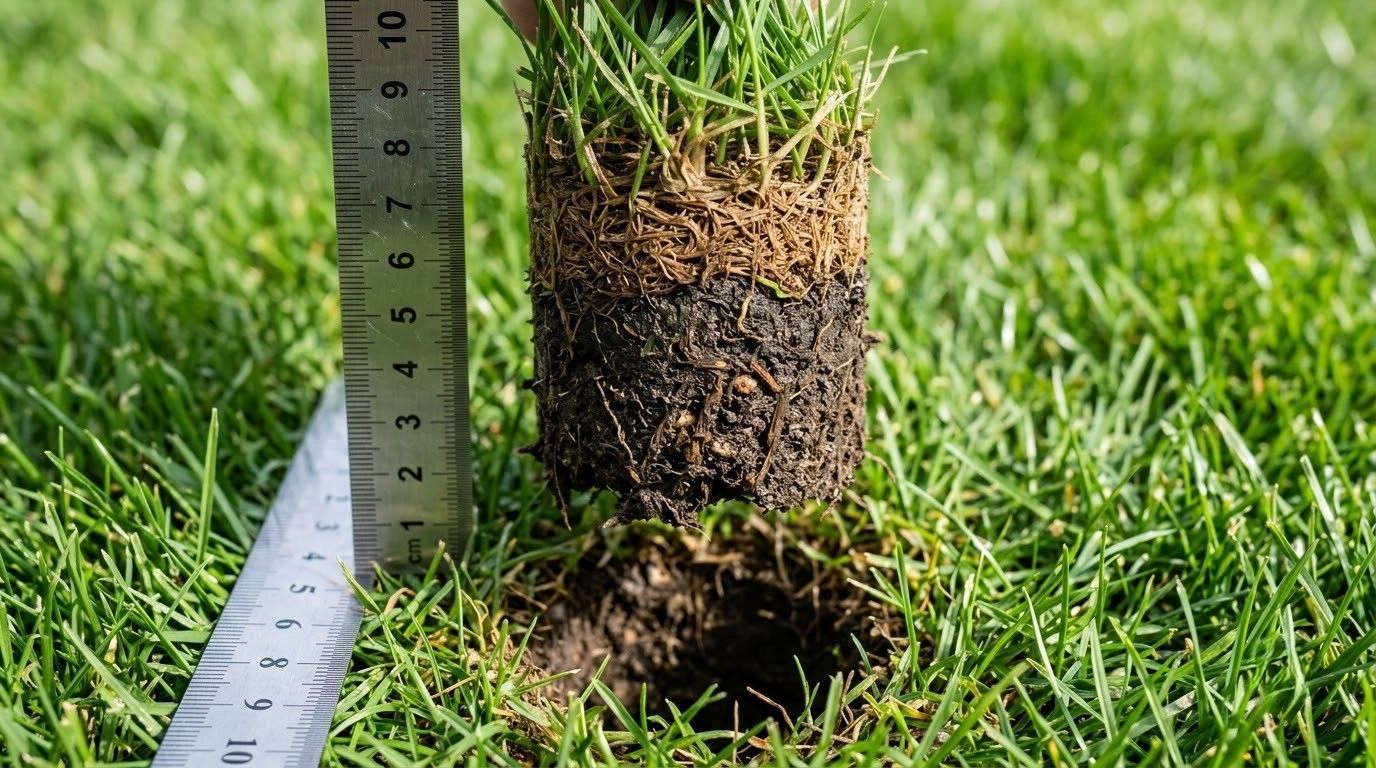
THATCH CHECK
Thatch Depth Assessment
One plug cut from the lawn shows the brown, fibrous layer between the green blades and the soil. Under 1/2 inch, we recommend waiting. Over it, we note the depth and use it to set the blades.
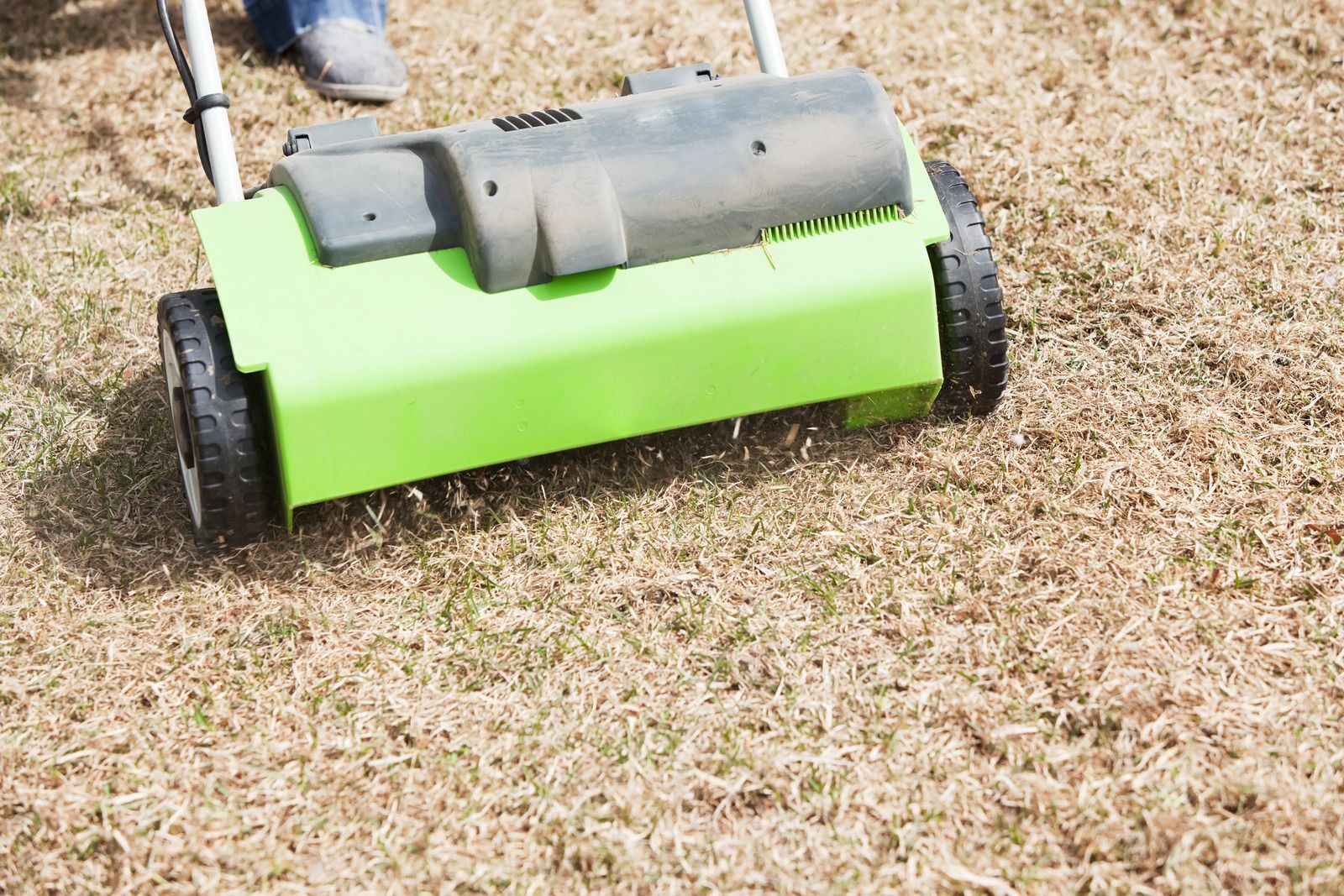
POWER DETHATCHING
Power Dethatching
Vertical steel blades spin down through the mat and lift it loose in a single pass, working far deeper than a rake ever reaches. The machine is walked in straight lines so every square foot gets the same treatment.
DEPTH PASSES
Depth-Adjusted Passes
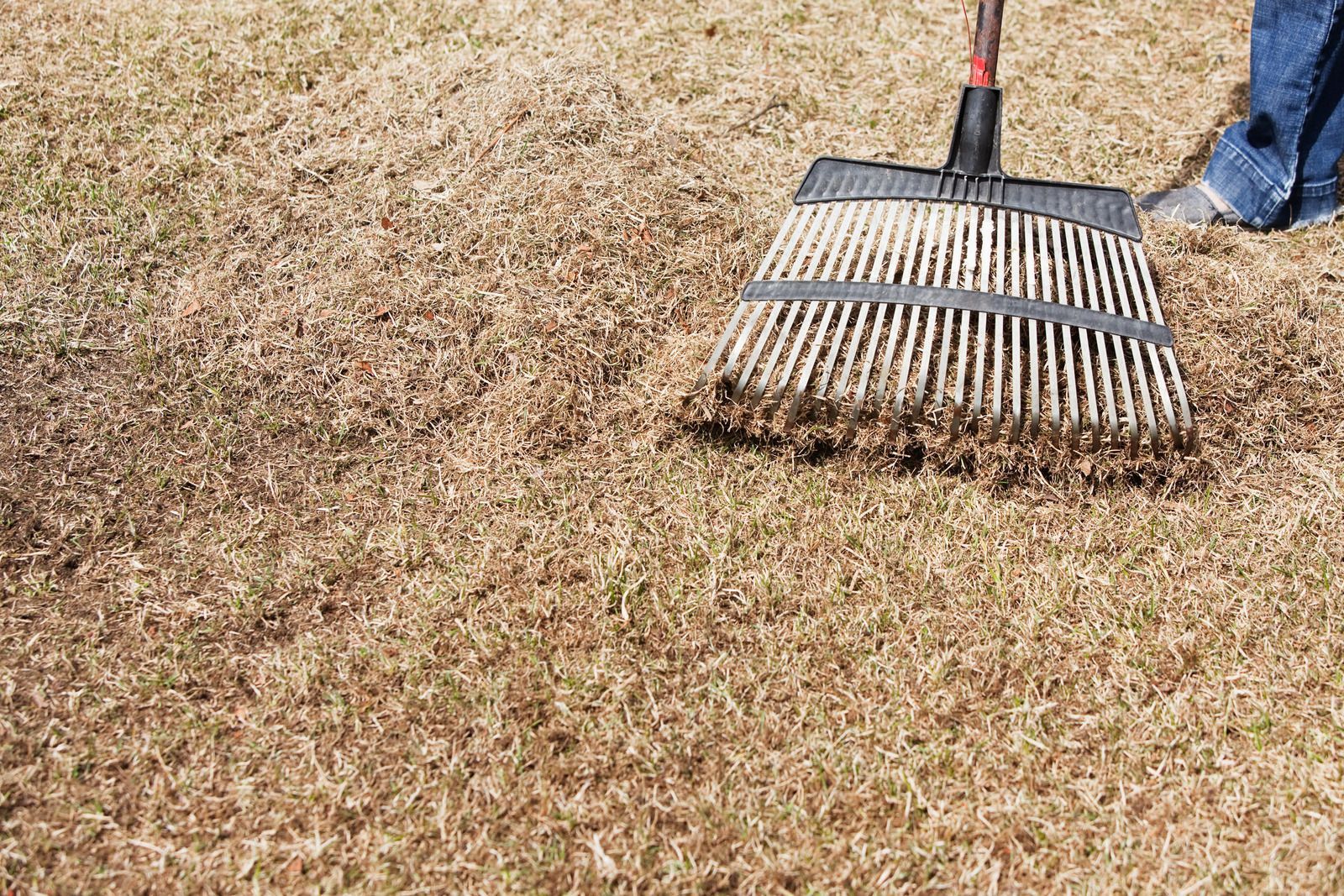
Heavy thatch does not come out in one go without tearing turf. Where the plug shows a thick mat, we run a shallow first pass and a deeper second one at an angle to lift material without pulling crowns.
RAKING
Raking and Collection
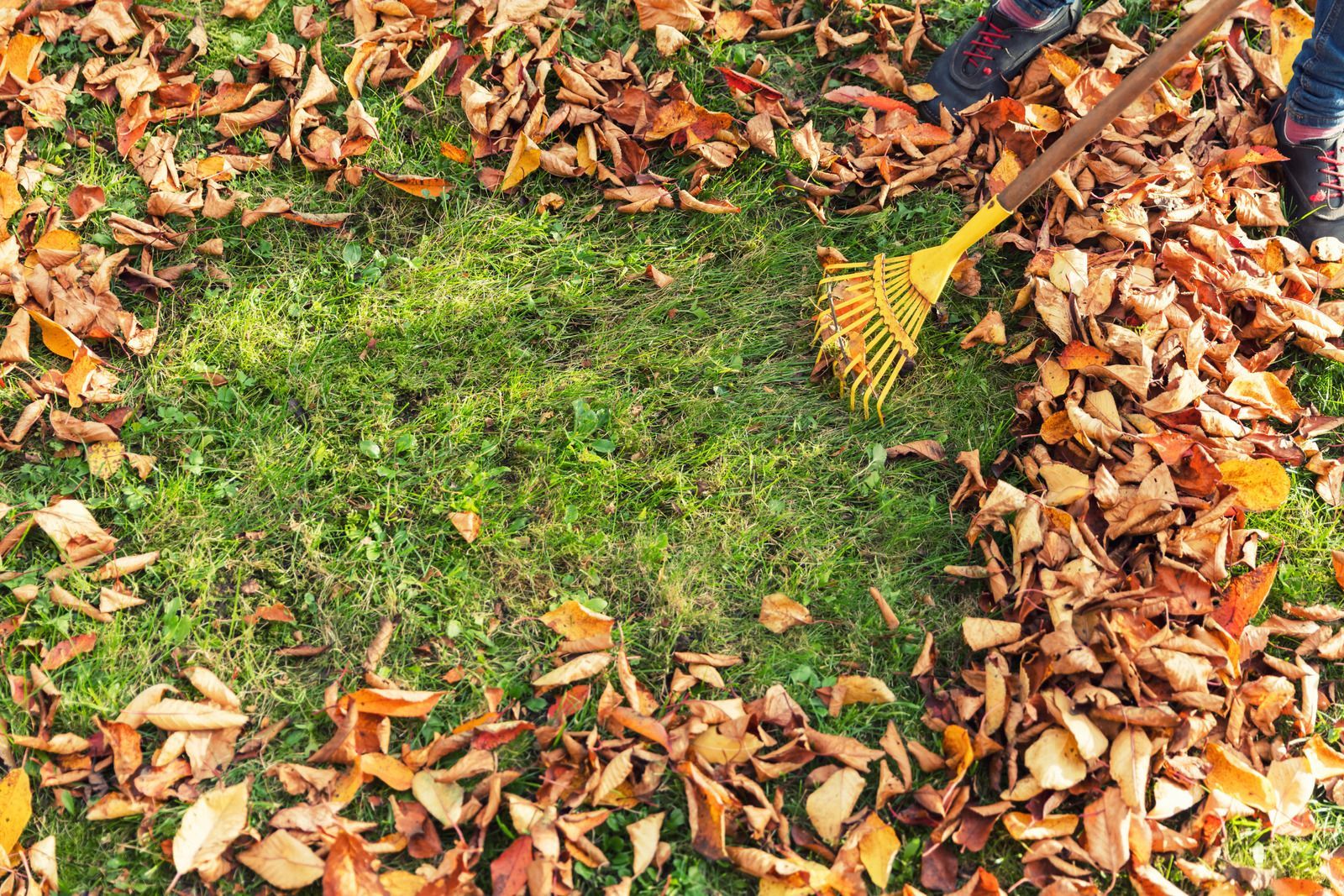
What the blades loosen has to come off the lawn the same day, or it settles back in as a new mat. We rake the rows onto tarps by hand and blow the fine material off the turf.
HAUL-AWAY
Material Haul-Away
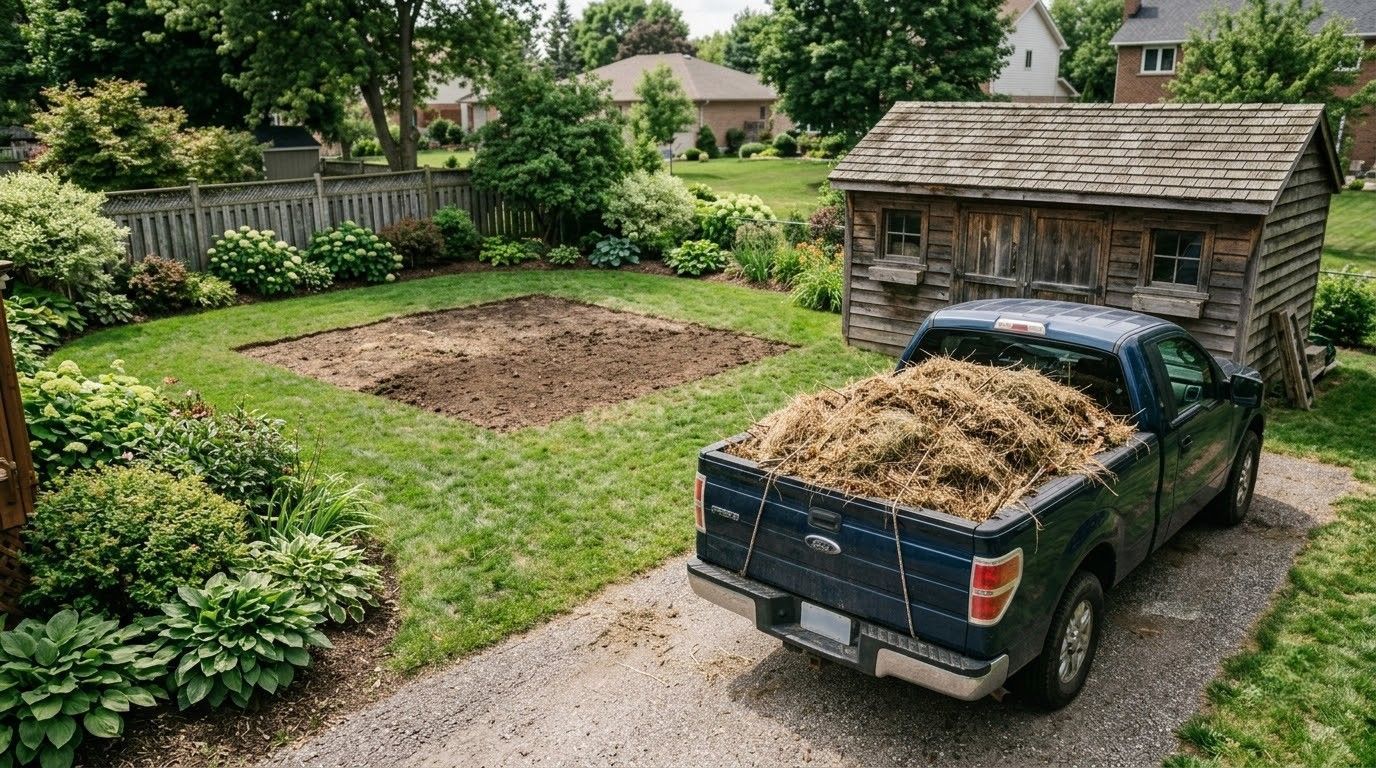
Everything raked up leaves on our truck. Thatch is slow to compost and quick to smother whatever it sits on, so it should not stay in a pile behind the shed or wait on a burn permit.
SCHEDULING
Standalone or Paired Scheduling
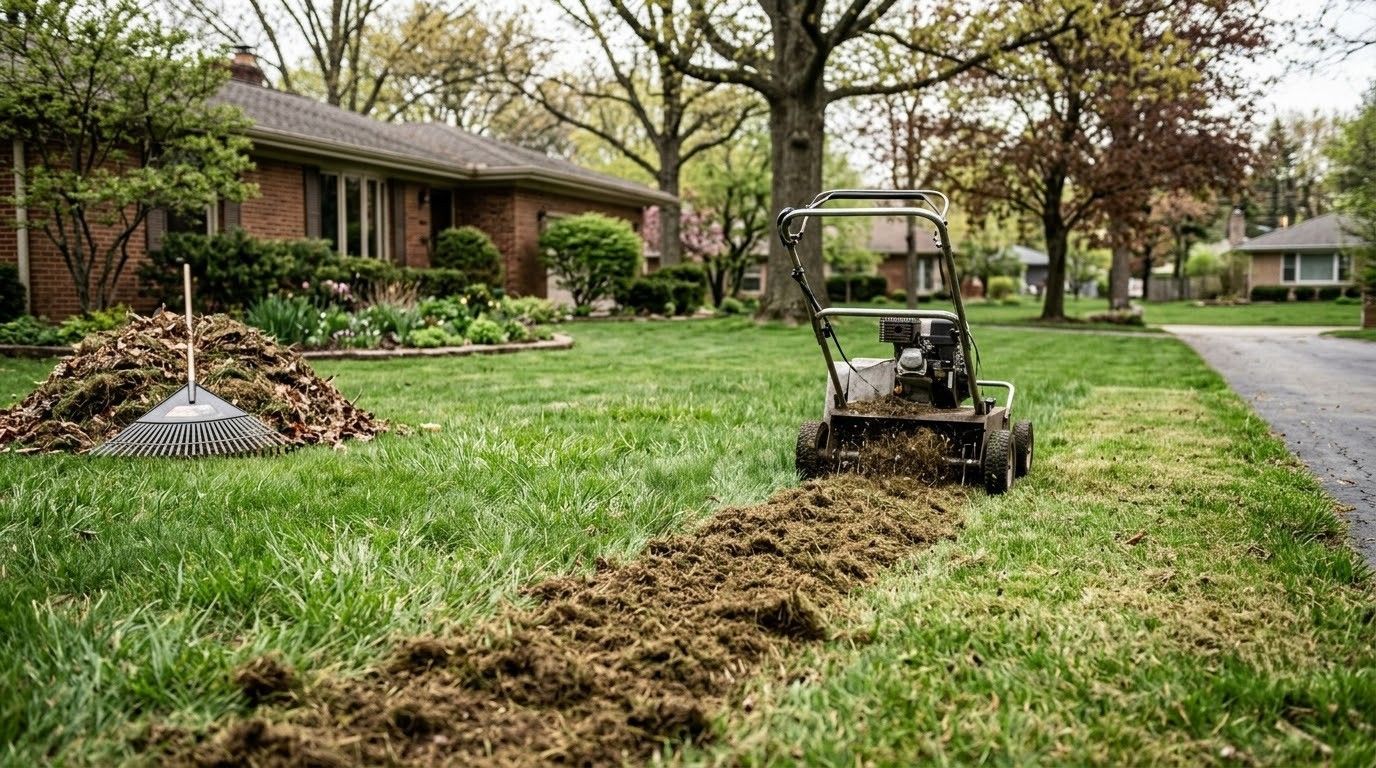
Book dethatching on its own, or pair it with your spring cleanup so the lawn is raked, cleared, and dethatched in one visit. Paired jobs save a trip and put the lawn on the mend sooner.
THE WORD ON OUR WORK
WHAT OUR CLIENTS SAY.
Dethatching is a service people are nervous about because the lawn looks worse before it looks better. The homeowners and property managers who have watched that turnaround describe it on our Google Business Profile, alongside reviews of our mowing, cleanup, and snow work. Read those before you decide.
Common Questions
FREQUENTLY ASKED QUESTIONS.
Most people have never watched a lawn get dethatched, so the questions run from whether it is necessary to whether it is safe. Here are the ones we answer most, straight.
How do I know if my lawn needs dethatching?
Cut a small plug with a trowel and measure the brown, fibrous layer between the green blades and the soil. More than 1/2 inch means it is time. Water pooling after irrigation and turf that gives underfoot are the other signs.
What time of year should you dethatch a lawn?
Spring, once the grass is actively growing and can recover from the disturbance. In the Bitterroot Valley that usually means May, after green-up but before the summer heat sets in. Fall dethatching risks sending a weakened lawn into winter.
Is dethatching bad for your lawn?
Not when the lawn needs it and the depth is set correctly. 406 Lawnzz checks thatch depth on every lawn in Stevensville, MT, before running the machine, because dethatching a lawn with a thin layer does more harm than good.
What is the difference between dethatching and aeration?
Dethatching removes the layer of dead material sitting on top of the soil. Aeration pulls plugs of soil out to relieve compaction underneath. A lawn can need one, both, or neither, and a thatch plug tells you which. We offer dethatching only.
How often should a lawn be dethatched?
Every 2 to 4 years for most lawns, and only when the plug shows the layer has crossed 1/2 inch again. Annual dethatching keeps the turf in a constant state of recovery. Leaving clippings on the lawn does not speed thatch buildup.
What should you do after dethatching?
Water lightly and consistently for the first 2 weeks and keep foot traffic off the thin spots. Overseeding and fertilizing work better after dethatching because seed and nutrients reach soil instead of sitting on a mat, though we do not offer either.
Can you dethatch a lawn too much?
Yes. Going too deep or too often pulls out crowns and roots along with the dead layer, thins the stand, and opens ground for weeds. That is why we set depth on a test strip and skip lawns under the 1/2-inch threshold.
What makes 406 Lawnzz the right choice for dethatching in Stevensville, MT?
Because we measure before we cut. 406 Lawnzz brings 8 years of dethatching in Stevensville, MT, a licensed and insured operation, a written bid before any work, and a rule that a lawn under 1/2 inch of thatch is left alone.
HOW WE WORK
FROM THATCH CHECK TO GREEN-UP, HERE IS HOW.
STEP 01
Tell us what the lawn is doing
Send a note with your address and what you have noticed: water standing after the sprinklers run, brown patches that will not green up, a lawn that feels like a mattress. We reply within hours to set up a look.
STEP 02
Pull a plug and measure
On site we cut a small plug from two or three spots, measure the thatch layer against the 1/2-inch mark, and check how the turf is rooted. If the lawn does not need dethatching, we say so and stop there.
STEP 03
Put the plan in writing
Your written bid lists the lawn area, the depth we plan to run, whether a second pass is likely, the raking and hauling, and the target week. Nothing starts until you have read it and said yes.
STEP 04
Set the depth on a test strip
Before running the whole lawn, we make a short pass along one edge, look at what came up and how the turf held, and adjust the blades. That strip decides the setting for everything that follows.
STEP 05
Dethatch, rake and haul
The machine goes over the lawn in straight overlapping lines, with a second angled pass where the mat is thick. Loosened material is raked onto tarps, the fine leftovers are blown off, and it all leaves on the truck.
STEP 06
Watch it green up
For 2 to 3 weeks the lawn looks thin and scratched. Then the grass that was fighting the mat gets air, water, and light and fills in noticeably thicker. Keep it watered lightly, and the recovery takes care of itself.
GET YOUR WRITTEN BID
BOOK YOUR DETHATCHING BEFORE THE HEAT ARRIVES, IN WRITING.
The window for dethatching in the Bitterroot Valley opens with green-up and closes when July heat arrives, so the lawns that get done are the ones scheduled early. Reach 406Lawnzz through our contact page with your address and a note on what the lawn is doing, and we will measure the thatch. If it needs the machine, you get a written bid for dethatching in Stevensville, MT, with depth, timing, and hauling spelled out.
WHAT YOUR BID COVERS:
- Thatch depth measured and recorded
- Blade depth planned for your turf
- Number of passes expected
- Raking and haul-away of all material
- Target week in spring
- Standalone visit or paired with cleanup