
Lawn Maintenance - No Fertilization
LAWN MAINTENANCE IN Stevensville, MT
MSU Extension puts the right mowing height for the bluegrass and fescue mixes on Bitterroot Valley lawns at 2.5 to 3 inches, and says never to take more than one-third of the blade per cut. Holding that line takes a schedule, not a Saturday. 406Lawnzz runs scheduled lawn maintenance in Stevensville, MT: mowing, string trimming, edging along drives and walks, and blowing off hard surfaces, laid out in a written bid before the first cut. We do not fertilize.
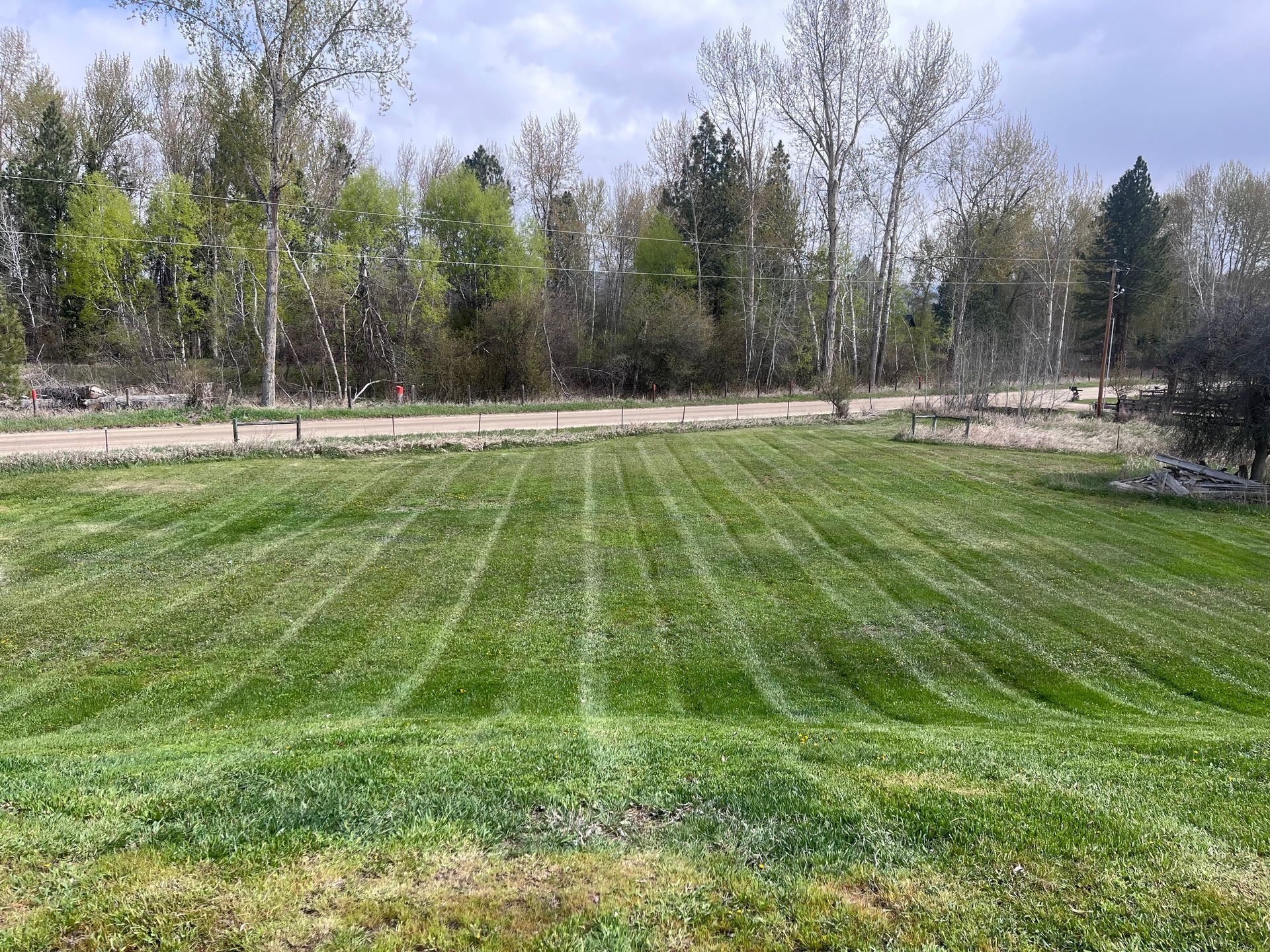
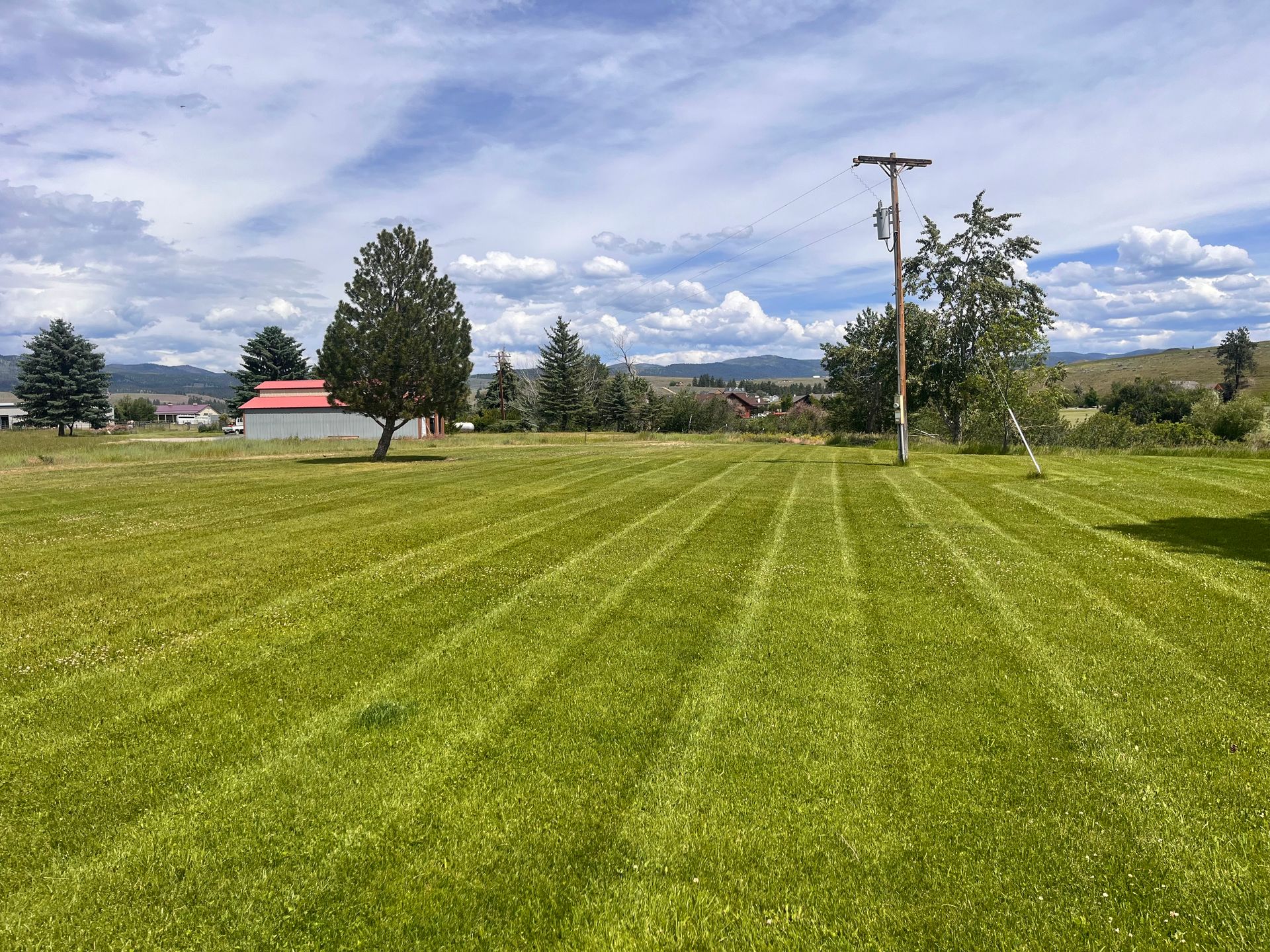
MOWING ON A SCHEDULE BEATS MOWING WHEN YOU GET AROUND TO IT.
Grass in the valley comes on fast once the ground warms in late May, and a lawn left 10 days in June gets away from you. Cut it back in one pass and you strip half the blade, which stalls the roots and scalds the turf. We show up before the grass outgrows the one-third rule, so every cut stays light.
Every visit covers the same four tasks: mow at the height the turf wants, trim what the mower cannot reach, edge the drives and walks, and blow the hard surfaces off before we leave.
- Cut at 2.5 to 3 inches
- Weekly cuts through peak growth
- Clippings returned to the lawn by default
- Rain days rescheduled, never skipped
LAWN MAINTENANCE
STEVENSVILLE YARDS LOOK KEPT WHEN THE CUT NEVER SLIPS A WEEK.
Stevensville lawns are cool-season grass, and cool-season grass does most of its growing in the weeks around the May 30 last frost and again when September nights cool off. Our route reads that rhythm. Weekly cuts through the June push, then a longer interval as July heat slows growth, with trimming around every fence post, tree, and foundation and edging along the drive so the yard reads as finished from the street, not just short.
270+ SUNNY DAYS AND 12 INCHES OF RAIN MAKE A LAWN THAT GROWS IN BURSTS.
The Bitterroot Valley floor around Stevensville gets about 12 inches of precipitation a year and sees 270+ sunny days, which the Forest Service calls high desert. MSU Extension figures a Montana lawn needs 1 to 1.5 inches of water a week in spring and fall and up to 2.5 inches in midsummer, so growth tracks the sprinkler more than the sky. We cut to the growth we find, not the calendar.
A MOWING ROUTE IS A PROMISE WE HAVE KEPT ALL OVER THE VALLEY.
We have run one mowing route across the Bitterroot Valley for 8 years, from Stevensville to Hamilton, Corvallis, Florence, Lolo, and Victor, and the lawns that look best in August are the ones that never missed a week in June. Our equipment and scheduling are built for Montana conditions, one crew handles every season, and a rain day gets rescheduled the same week rather than dropped. Want that routine on your lawn?
WHY CHOOSE US FOR LAWN MAINTENANCE.
CUT AT THE HEIGHT THE GRASS WANTS
Bluegrass and fescue hold up best at 2.5 to 3 inches, so that is where we set the deck. Taller turf shades its roots, holds moisture through July, and stays thicker than a lawn that gets scalped every other Saturday.
A ROUTE THAT HOLDS ITS DAY
Your lawn lands on the same day each cycle, weekly at peak and every 10 to 14 days once summer slows it. That rhythm keeps every cut inside the one-third rule, the difference between mowing and shocking the turf.
RAIN DAYS MOVED, NOT DROPPED
Wet grass clumps, tears, and leaves ruts, so a storm morning pushes your visit to the next dry window rather than forcing a bad cut. The reschedule stays inside that cycle, and you hear from us first.
CLIPPINGS PUT BACK TO WORK
Grasscycling is our default. Finely cut clippings left on the lawn return nitrogen to the soil and, according to MSU Extension, do not cause thatch. Bagging is available on request for properties that want a cleaner look after each visit.
EDGES THAT READ FROM THE STREET
Edging along drives, walks, and beds is part of every visit, not an add-on. The line between turf and concrete is what a passerby notices first, and a sharp one makes even a plain lawn look cared for.
ONE CREW ALL SEASON LONG
The people who make the first cut in late spring make the last one in early fall, so nobody has to relearn where the sprinkler heads sit, which gate sticks, or where the dog runs the fence line every week.
WHAT WE MOW
OUR LAWN MAINTENANCE WORK
Lawn maintenance from us means the four tasks that keep a yard looking kept between visits, done in a fixed order every time, and a schedule that flexes with how fast the grass is actually growing.
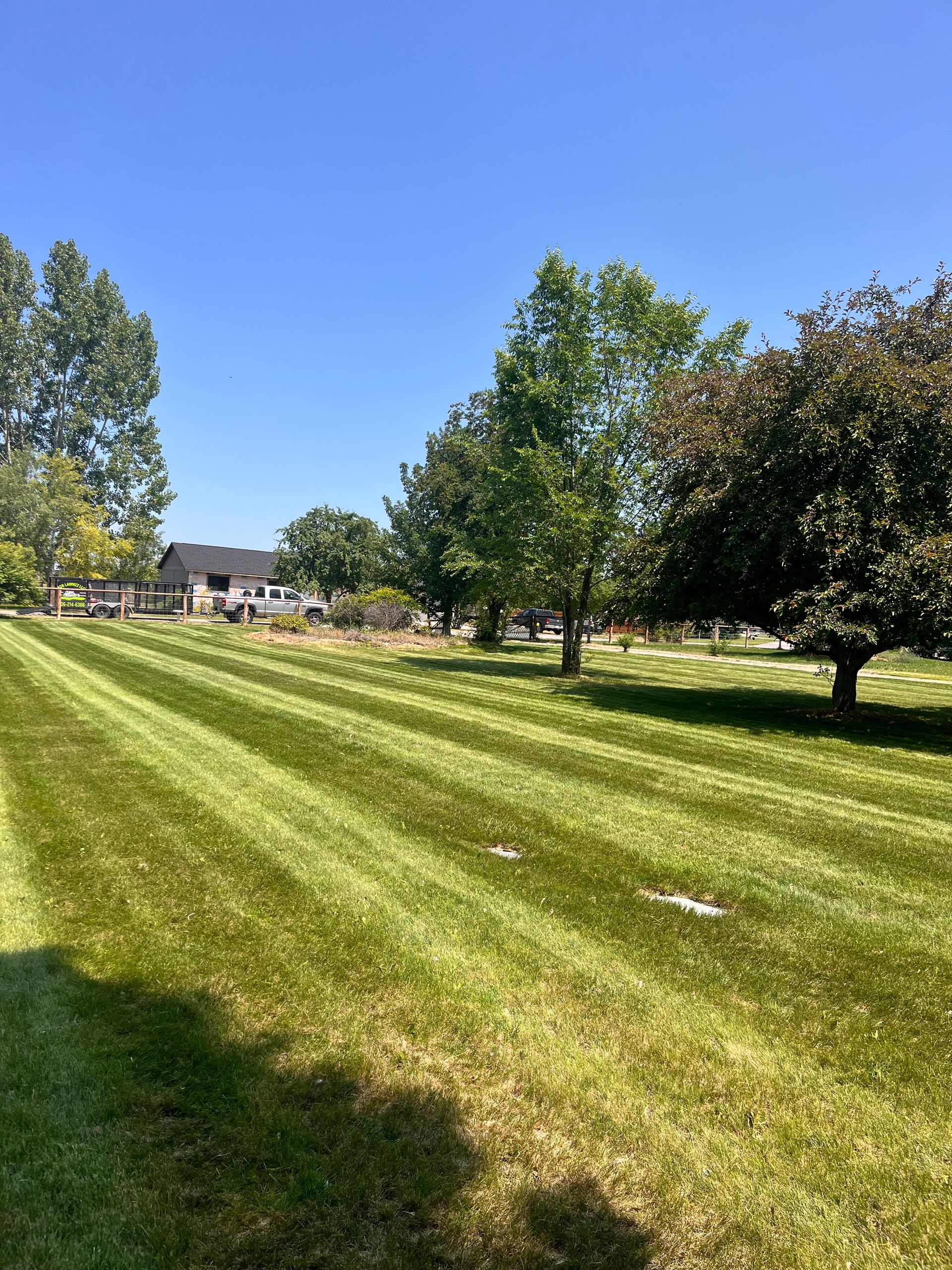
WEEKLY CUT
Scheduled Mowing
Mowing at 2.5 to 3 inches, weekly through peak growth and every 10 to 14 days once the heat slows things. We alternate mowing direction between visits so the turf stands upright instead of lying over in ruts.
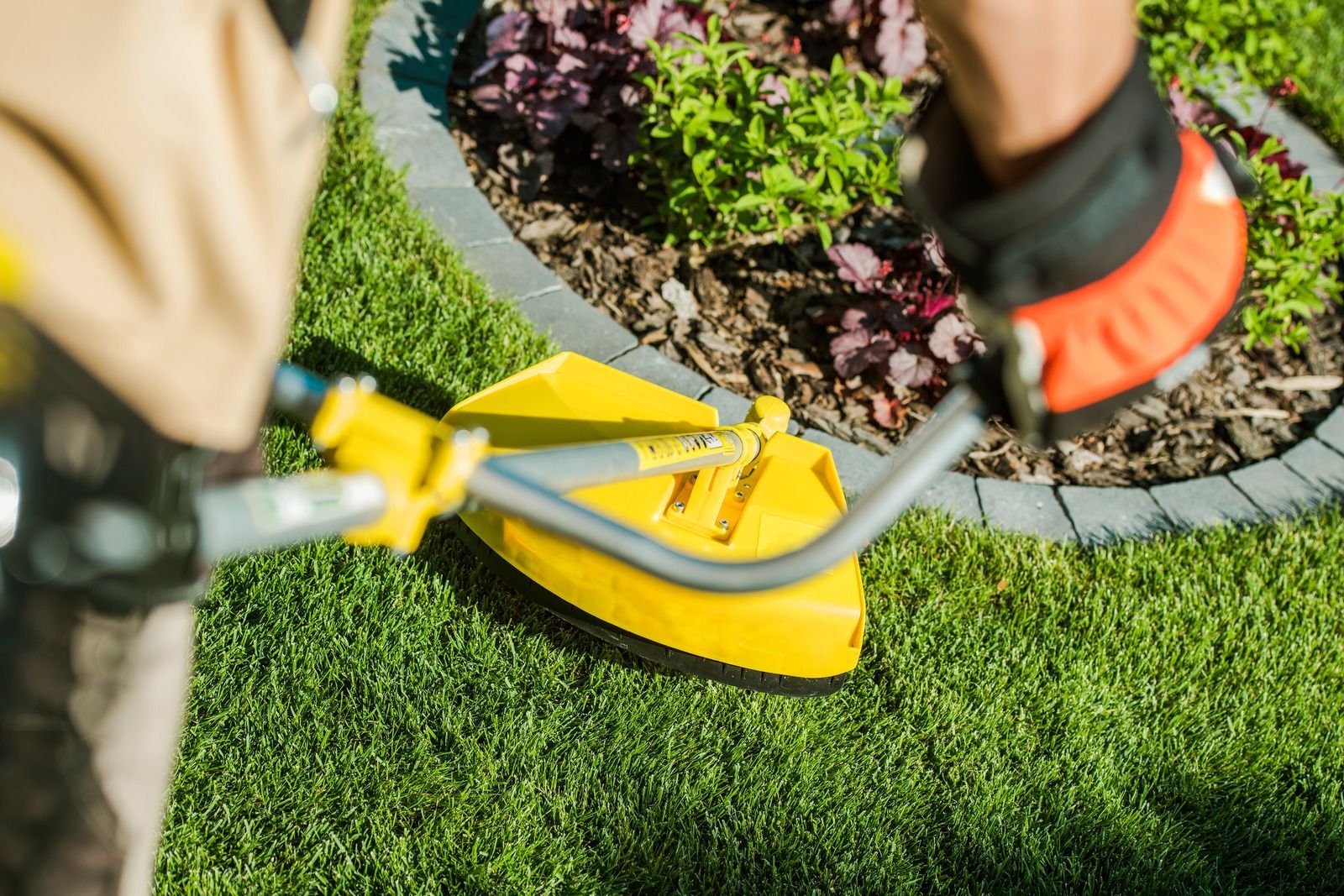
TIGHT SPOTS
String Trimming
Around trees, fence posts, mailboxes, foundations, sheds, and anything else a mower deck cannot reach. Trimmed to match the mowing height, not scalped, so there is no brown collar around every obstacle on the property after we leave.
CRISP LINES
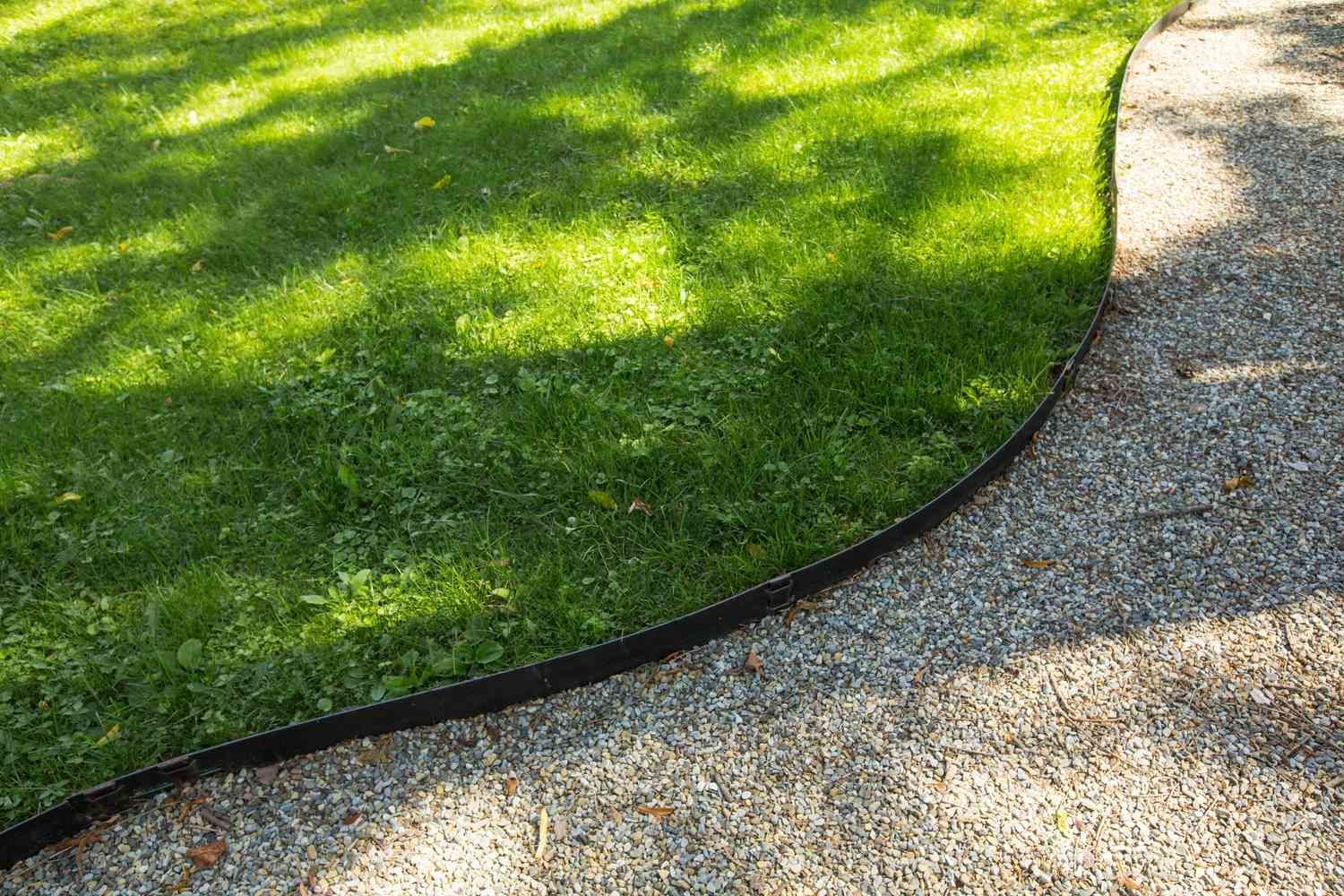
Edging Along Drives and Walks
A vertical cut along driveways, sidewalks, and bed borders that keeps turf from creeping over the concrete. Done each visit, the line stays sharp with a light pass. Skipped for a season, it takes real digging to bring back.
CLEAN FINISH
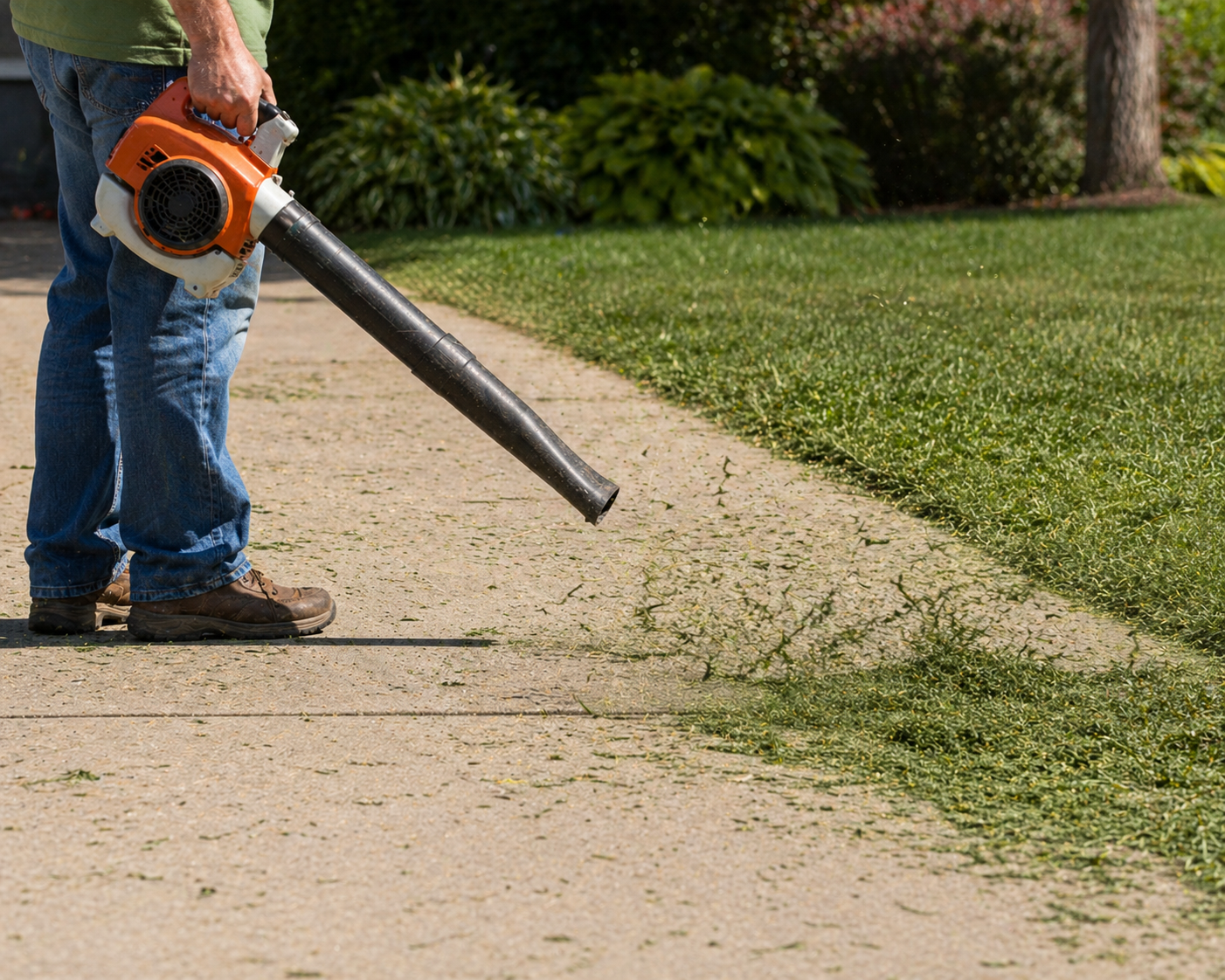
Hard Surface Blow-Off
Clippings and trimmer debris get blown off driveways, walks, patios, and steps before we leave, so the property looks finished rather than freshly mowed. Nothing tracks into the house and nothing washes into the gutter with the next rain.
GROWTH PACE
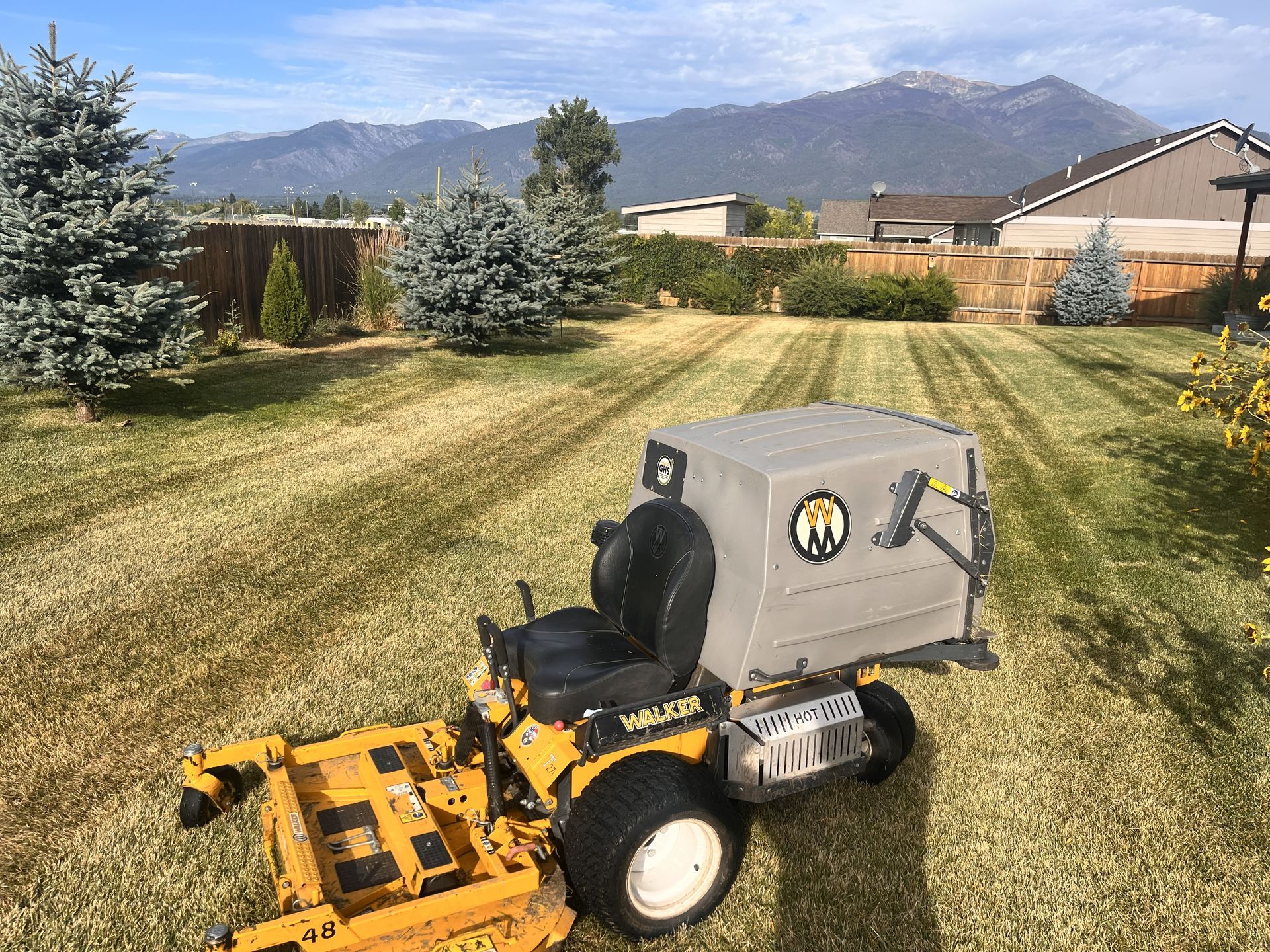
Growth-Based Scheduling
Cool-season grass surges in late spring and September and slows through the July heat. The interval follows that curve, tightening when growth is fast and stretching when it is slow, so no cut removes more than one-third.
BAG OPTION
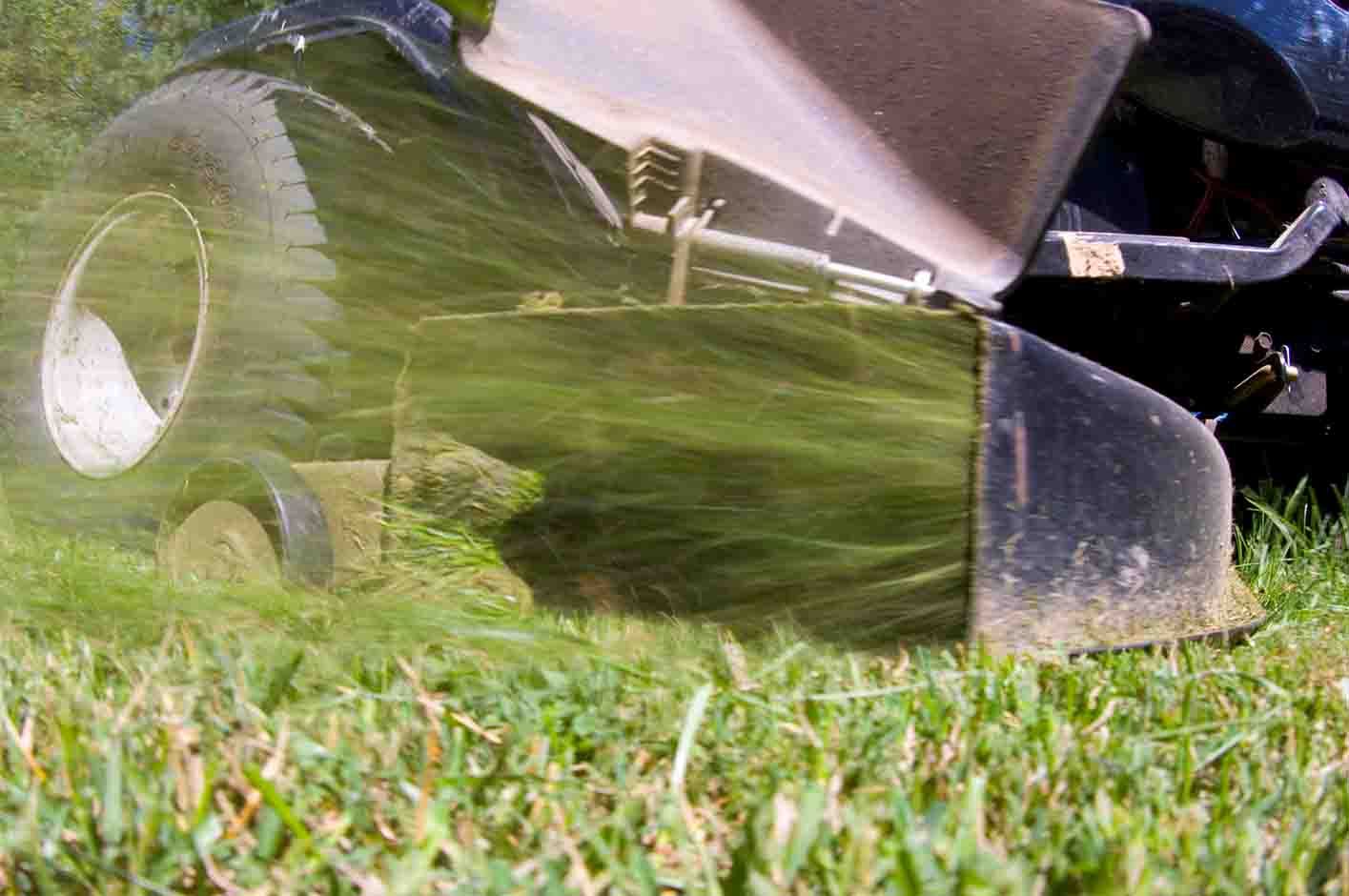
Optional Clipping Bagging
Grasscycling is standard, but clippings get bagged and hauled on request, which some properties prefer when the lawn has gotten long after rain or before an event. Extra visits ahead of a party can be added to the route.
THE WORD ON OUR WORK
WHAT OUR CLIENTS SAY.
The best read on how we mow is what property owners have written on our Google Business Profile, where a few points keep coming up: the lawn gets cut on the day promised, the edges stay sharp, and the walks are blown off. Read a few, then decide.
Common Questions
FREQUENTLY ASKED QUESTIONS.
Straight answers to the mowing questions we hear most from property owners around the valley, from cutting height to whether clippings belong on the lawn or in a bag.
How often should a lawn be mowed?
Often enough that no cut removes more than one-third of the blade. Around Stevensville, MT, that means weekly late May through June, then every 10 to 14 days as heat slows growth. 406 Lawnzz sets the interval by growth, not the calendar.
What height should grass be cut in Montana?
MSU Extension recommends 2.5 to 3 inches for the bluegrass, fescue, and ryegrass mixes planted across Montana. Grass kept at that height shades its own roots, holds moisture longer in July, and recovers from heat faster than turf scalped to 2 inches.
Is it better to bag or mulch grass clippings?
Leaving the clippings is better for the lawn. Finely cut clippings break down, return nitrogen to the soil, and do not build thatch, so grasscycling is our default. Bagging makes sense when grass has gotten long after rain or a missed week.
Should you mow wet grass?
No, and we do not. Wet blades tear instead of cut, clippings clump and smother the turf underneath, and a mower on soft ground leaves ruts. A rain morning moves your visit to the next dry window within that cycle.
Why is edging important?
Turf spreads sideways, and without a vertical cut along drives, walks, and beds, it creeps over the edge and buries the line. Edging on every visit keeps that border crisp. Left for a year, it takes real digging to restore.
How short should grass be cut before winter?
A notch lower than the summer height for the final cut. MSU Extension notes that lawn left long under snow mats down and gives voles cover, while grass cut shorter before snowfall comes out of the spring melt with fewer gray patches.
Does regular mowing prevent weeds?
Regular mowing helps, because dense turf cut at 2.5 to 3 inches shades the soil where weed seedlings would sprout. It is not weed control, and herbicide, aeration, and pest treatments are outside what we offer. Mowing keeps a good lawn good.
What makes 406 Lawnzz the right choice for lawn maintenance in Stevensville, MT?
You get a written bid up front listing interval, height, and start date, a route that has held its day across Stevensville, MT, for 8 years, and quick replies, often within hours. 406 Lawnzz mows, trims, edges, and blows off every visit.
HOW WE WORK
FROM FIRST CUT TO LAST CUT, HERE IS HOW.
STEP 01
Walk the property and measure the lawn
We start with a visit to see the lot: how much turf there is, where the obstacles sit, how the drive and walks meet the grass, and what the height and thickness say about how the lawn has been handled.
STEP 02
Put the schedule and scope in writing
You get a written bid before any mowing starts. It lists the mowing height, the cutting interval, what each visit includes, the bagging option, and the date of the first cut, so nothing about the routine is left to memory.
STEP 03
Make the first cut at the right height
The opening cut sets the deck at 2.5 to 3 inches and takes the lawn down in stages if it has gotten away, never more than one-third per pass, so the turf is not shocked going into its fastest-growing weeks.
STEP 04
Mow, trim, edge, and blow off every visit
Each visit runs in one order: mow the open turf, trim around trees, fences, and structures, edge along the drive and walks, then blow clippings off every hard surface. Clippings stay on the lawn unless your bid says otherwise.
STEP 05
Adjust the interval as growth changes
As the July heat slows the grass, your route stretches from weekly to every 10 to 14 days, then tightens again when September nights bring the growth back. Rain days move to the next dry window in the same cycle.
STEP 06
Close the season with a shorter final cut
Once growth stops in early fall, we make a last pass a notch lower than the summer height, blow the surfaces off one more time, and confirm whether you want that route reserved for the following spring.
GET YOUR WRITTEN BID
YOUR MOWING DAY, YOUR CUTTING HEIGHT, AND YOUR START DATE, IN WRITING.
Send a few details about your property through our contact page: the address in Stevensville, MT, or a nearby town, the rough lawn size, and whether you want weekly service through peak growth or a longer interval from the start. 406Lawnzz will reply, usually within hours, to set a walk-through and then put the schedule, the scope, and competitive pricing into a written bid before the first cut.
WHAT YOUR BID COVERS:
- Mowing height and cutting interval
- Start date for the first cut
- Trimming, edging, and blow-off every visit
- Grasscycling by default, bagging on request
- Rain-day reschedule inside the same cycle
- Price for the full mowing season